I didn’t do my little list of things to read on the internet today, mostly because something else is taking up a lot of the news. There’s nothing like the invasion of a formerly fairly stable country (though admittedly one with lots of problems itself for people who were watching) to suck the air out of the room. It does kinda cause self-reflection, especially since I know people living in Ukraine, and I’m presently praying they’re safe.
As a Christian that has been trying to live the Christian life for a couple of decades now, though, I’m finding my heart is doing something different than the last couple of times major wars happened. It might be because as a much older man, I’ve been through the drill a couple of times. I was a child of 5 when the Soviets invaded Afghanistan in support of the communist government there, I remember when the soviet union then collapsed, and hardliners later tried to overthrow the democratically elected government, I remember both Gulf wars, the Balkan conflicts, and obviously the most recent war on terror. I’ve even been to a few countries that were in the past ravaged by war, or are sadly now failed states.
Where once I was scared and nervous about what would happen (and don’t get me wrong, the present war in Europe may get a lot worse, and I know it), I’m now sadder than anything else. The fact is that as one of my more secularist friends put it today “I don’t know what I can do, so I’ll change my 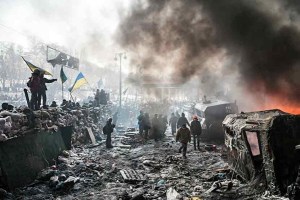 Facebook picture frame”. Well, I do believe that prayer does things and that the prayer I give can have effects on things because the God I pray to has control of everything, but I’ve also read the book of Job. I know that God can have plans for the suffering I’m now watching on the internet, and if He does, His purposes will be ultimately served (even if those purposes include seeing God work through the prayers of His people). Jesus even warned us that such things would happen, and not to be alarmed by them:
“And you will hear of wars and rumours of wars. See that you are not alarmed, for this must take place, but the end is not yet. For nation will rise against nation, and kingdom against kingdom, and there will be famines and earthquakes in various places. All these are but the beginning of the birth pains.”
Matthew 24:6–8 (ESV)
So why am I sad? People are suffering, and suffering hurts. In one of the most famous passages of scripture (partially because it includes the shortest English verse in scripture) Jesus wept for the death of His friend Lazarus, even as He knew that in mere moments, He would be calling His friend forth from the grave. So even if I know that God can work things together for good, and even if I know that ultimately things work out for the best, that doesn’t change the pain on the journey, and nor does it change the fact that I weep for friends and strangers who will be devastated over the next however long this war lasts. I will pray, even pray in faith, but by God’s grace, I will weep with those who weep.
As Christians, these are all things we can do on a day like today.
SDG
 I say this because we are about to go through, as a culture, a very similar experience now. Within a month, if all goes well, all of the provincial health restrictions that have been in place for 2 years will be gone. We will suddenly be able to mingle and meet as we only have in very limited ways over the past 2 years. And yet, for good or ill, we have all changed over that 2 years. The men and women coming out of Covid are not the same people who went in, and since we’re tempted to imagine that we’re returning to normal, we may think that we’ll simply step out of Covid as if nothing has happened.
  handed actions have on dissent. For example, the government has stated that it may freeze bank accounts without a warrant during this time. The mere threat of that happening is likely to make many people think twice before they donate to oppose government action.
  (considering) 8:28