• So this morning I again ran into the issue of fan death in Korea through a facebook comment, and I had a chance to reflect on my experience…

    A quick explanation: Fan death is the belief that if a person on a hot day closes off their room and falls asleep with a fan pointed at him, there is a chance that he will die.

    Sounds kinda strange, especially coming from a country with an extremely high level of scientific education. There is no shortage of people who think this is a very stupid belief, and to be honest, I used to be one of them. But then, I actually got past my immediate dismissiveness and looked into it a bit. Now, I’m still not sure I’m fully convinced of the need for timers on fans (which are standard in Korea), but I do have to agree with some climatologists and the American EPA (see appendix B)  that there is at least something to this.

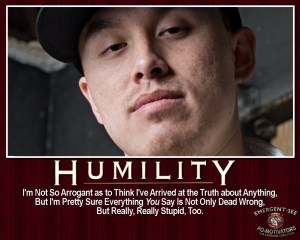
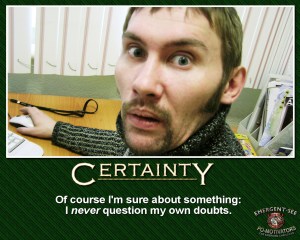
    So what happened here? Why was I so convinced that people who believed something that was easily checkable were wrong simply because their belief did not fit into my preconceived ideas. I had forgotten the fact that it is best to not just know THAT something is incorrect, but do the work of finding out why it is incorrect. I think this is one of the reasons

    behind the Biblical statement that “the fear of the Lord is the beginning of wisdom”. (Ps 111:10, Pr 1:7; 9:10) That is to say, you will be strikingly unable to learn if you believe yourself to be the apex of knowledge and truth (thus have no fear of God).

    I think this is common in society at large as well. Reading opinion pieces in the world’s newspapers, you will often find them full of confident assertions (some true, some less so) with little basis in either argumentation or reference to some place where I can go check myself. It seems to be part of almost all debates (climate change, capitalism/socialism, religion, politics, and on and on).

    The upshot is that I wonder if the dominant culture has trained people to be so confident of their own beliefs, that very few people are even listening to opposing positions anymore, and even fewer are learning anything.

  • This week marks one year since I first arrived in Korea and began to preach at the English Worship Service at Sangdang Presbyterian Church. I have to say that pastoral ministry is greatly different than I had imagined it to be, though I’m betting much of that has to do with the different kind of ministry I’m part of. I also know a little better why pastors give newbies like me the advice that they do. Here at the end of the first year, I figured I would say a few of the things I’ve learned (in no particular order).

    1. Carry a pen and paper everywhere.

    This has a few reasons, but the biggest is that pastors often get told the most important things as an aside halfway through a conversation. It’s a good practice to be able to write down, as soon as is practical, information you will need to remember so that you can pray for and better love your congregation. It also helps you keep straight the things people are expecting you to do. Remember to sync that information with your day planner.

    2. Loving people is work.

    Pastors are expected to love their congregation members, and that is not always easy. This is not just because the members of your church are sinners, but because you are at heart a sinner. Myself, I am often struggling with my desire to always be right, and holding my tongue over unimportant criticisms for the sake of the relationship is difficult for me. I often want to defend myself against (perceived) attacks, rather than see the Gospel as central. As a pastor, I am finding I need prayer and repentance more than I had expected. Honestly, it’s easier to see the grace of God now, since I know that any good done through my ministry is going to be Him.

    The upshot is that pastors cannot do the easy thing and just hang out with the people who they find it easy to like. That is to be lazy, and is also a bad habit you don’t want your congregation to pick up.

    3. Preach the Gospel!!!! be ready for change (and for no change).

    It is the pastor’s job to, in season and out of season, preach the Gospel to people who may or may not be willing to hear it and be changed. Sometimes pastors face the difficulty of dealing with hard hearts who will simply show up Sunday after Sunday (or stop showing up). Other times, the Gospel will find soft hearts, but that is not going to be any less difficult. The Word of God changes people’s lives, and repentance can be messy.

    4. Sometimes critics are your best friends.

    It’s very easy to bask in the good things people say after you preach a sermon that reached them in a good way. That said, not everything you say is going to be golden, and in your congregation may be people who see your errors faster than you do. With my own ministry (with a high turnover rate), catching your errors and misstatements can be more important, since you will have a very small window to correct your mistakes.

    This is also why you need to train your congregation to see God as revealed through the Bible as the primary authority, not you. Ideally, people in your congregation should be learning to ask questions of the text and of your sermons, and then seeking the answers in the Bible as they listen to you. This may mean more work in dealing with criticism that may, or may not, be well-founded, but it also means that you get to learn from the congregation and how God speaks to them.

    5. Do discipleship for the Kingdom of God, not for your own personal fiefdom.

    Since foreigners are only going to be in Korea for a limited time, and the Koreans have a great system of discipleship in place, it’s tempting to simply see the worship service as a stopgap while people are here for a short time. After all, the fruit of work you put into discipling people will not accrue to your own ministry, but will instead be to the various places these people go after they are with you. But the scriptures say that one plants, another waters, and another reaps the harvest. Just because you have no reason to expect to reap the benefits of your work does not mean you have the right to shirk your duty to plant or water.

    Besides, unless people are growing under your care, they are dying under your care. There is no 0 movement faith. You will still need to give an account for a short time of ministry with them as with a long time.

    6. Make sure you have supports.

    A pastor is human. That’s not always realized by the people in your congregation. You have all the same struggles regular believers have, and so like them, you need to have the supports you tell them they need. This means that you have to put time into developing “non work” friendships where you can be real, and where you can be corrected, or just have fun. Ideally, these would be the fellow members of a board of elders, but in any case, good Christian friends are just as necessary for the pastor as for the congregation. After all, a pastor is just an undershepherd, and will sometimes need to be shepherded himself.

    7. Family is very important.

    This might be a little controversial, but the Bible states that an overseer (or pastor) must be able to manage his own family well. This means that sometimes the congregation will have to take a back seat to your marriage, or to your children. Some say that if you take care of the Church, God will take care of your kids. I don’t see that in scripture, and instead see the command to provide for my family.

    A pastor should never model the evil understanding that a job (any job) is more important than the Gospel reflection that is marriage. A pastor must love his wife as Christ loved the Church, or he is not serving his Church well, or the Gospel.

    Some would say that’s easy for me to say, as I’m a single pastor. Well, if so, it’s one of very few things made easier by being a single pastor.

    8. Pastors should, ideally, be married.

    This one hurts to say since I am not married (and given my present ministry am unlikely to be married anytime soon). I am not saying that every pastor must be married, or that there are not benefits to not being married (I am able to place more effort into Christian service than married pastors), but I am saying that a married pastor is probably in a better position in many ways.

    In the first place, the pastor can thus better model in his life what a Christian family should look like, and also get the sanctification that comes from being married (having a spouse means having someone who will know all your sin, so you won’t as easily be able to hide it, and thus will have to face it for the sake of the marriage). A wife is also a complement to your ministry, as she would ideally provide the emotional support a pastor will often need, as well as the sympathetic ear and a person who you can be perfectly honest with. Note: I am not saying that she needs to perform ministry duties in the Church beyond what other Church members provide. She should be a committed Christian, and thus a member of the Church, but there is no church office of “Pastor’s Wife”.

    I don’t think this is a type of “grass is always greener” syndrome, as I am aware that marriage adds many stresses (and children many more). Nor do I think I am saying that being a single pastor is wrong (or else I’d resign). I am just saying that a godly marriage is usually beneficial for a pastor.

    Anyway, that’s all the reflections for the moment. Comments anyone?

  • For you created my inmost being; you knit me together in my mother’s womb.I praise you because I am fearfully and wonderfully made; your works are wonderful, I know that full well. (Psalm 139:13-14)

    Dad: We made a beautiful daughter

    (4 year old) Daughter: God made me, and you are not God.

    As I was walking out of Church on Sunday, the above-mentioned father related the above exchange with his precocious daughter. While it was an amusing exchange, it also reflects a correct, and I would say, very useful understanding of theology.

    I can only pray that both father and daughter remember it.

    I pray that dad remembers it when in a few years his daughter begins to show her intelligence and beauty to the world, and he thanks God for her, instead of pegging his own value on how well she performs in the world.

    I pray he remembers it when this same daughter cries at some failure, which will seem huge to her. That he then avoids piling on to her disappointment, and instead reminds her that the good and wise creator of the universe made her, and he does not make mistakes.

    I pray he remembers it as she rejects him at different times. First as she leaves him for her new friends, and later as she rejects him for being embarrassing in her teenage years, and finally if she walks down the aisle to begin a life together with another man.. He will need to remember the gift of God that she is, and that she was his gift only for a time.

    I pray she remembers the truth at the same time, when she realizes that her dad is not perfect, and he will let her down, but she is made for greater things than simply her father’s decision or desire, and while her genes are a mix of her dad and her mom, they are not simply random ones.

    I pray she remembers it as she gives birth to her first child, who will be beautiful, and full of potential, and yet blemished and imperfect in some eyes in the world. God will have made her child too.

    I pray also that she remembers it (by God’s grace) many decades hence, when with tears in her eyes she buries the earthly father who loved her well, confident that the God who made her and him, and brought them together for a time by his grace, is trustworthy to take care of him until time ends and all tears are wiped away.

  • “So whether you eat or drink or whatever you do, do it all for the glory of God.”

    I Corinthians 10:31

    It may be that I like omelets too much.

    Many people are moved to worship of God by great music, decent preaching, and other more “Churchy” things. I wonder though, if at the end of time, and we’re standing before the throne of the heavenly glory that there won’t be a mass of people who have, in their own ways, led to amazing amounts of worship to God by simply doing their jobs well, especially today the guy who made my omelet.

    It may be the whole “being at a Pastor’s conference” thing, but when I arrived in Louisville last night after a hugely long trip, I found myself very thankful to a whole raft of people who had simply spent time doing their jobs well. There was the concierge at the Hotel, who so kindly told me where to find a great mexican restaurant in easy walking distance, there was the waiter there, who so kindly helped me navigate the blinding array of choices for a plate of Nachos, and then let me and the two great pastors I met from South Dakota stay outside at the table and discuss the direction of theology in the west.

    Then, this morning, jet-lagged as all get out (I woke up at 4 AM and couldn’t get back to sleep), the waitresses and waiters at the restaurant were so kind and helpful (even right after opening and dealing with a wide eyed Canadian pastor), and far more cheerful than anybody should be at that time of the morning. Then, the man behind the counter made one of the most amazing omelets I’ve ever had. In the end, I was looking out the window of the restaurant thankful to God for all of these people who had worked to create a good experience for me, and in the end praise God for the goodness of food, and smiles, and politeness, and a clean table.

    I guess the upshot is that these people had all worked together to reflect the glory of God’s creation in a so many ways, just by doing their jobs well. While none of them spoke to me about the Gospel, all of them did impel my heart to praise God. A God who instead of wrath today, gave me a morning filled with the joy of people, and the enjoyment of good food. I am not sure that any of them knew they were leading me in worship, but they were. I am only sorry now that there have been so many times when I have been blind to God’s grace, mercy and love shown through people doing good work.

    I pray that I don’t fall into blindness about this soon, I enjoy praising God for the smiling man preparing the omelets, and I pray that God will bless him as much as God has blessed me through his good work.

  • “Yeah, well, evolution is only a theory”

    “Yeah, well, so is gravity”

    I’m sure many people have heard an exchange similar to this one at some point in the past. It is one of the most common, and most misleading exchanges possible in debates about scientific ideas.

    Now, I’ll be the first to admit, I don’t have a dog in this fight. There are conservative Christians I agree with on many things who also support some form of evolutionary theory, and Christians who I agree with on many other issues who are opposed to any form of evolutionary theory. To be honest, my background is not in the biological sciences, so I simply do not have enough understanding of the raw data.

    My problem with the above exchange is that it is at best misleading, and at worst betrays a fundamental misunderstanding about the role of theories.

    Both statements are, however, true (as far as they go).

    A theory (at least as I understand it), is a useful (often predictive) reasoned explanation for the factual data which can be observed in the world. That is to say, the theory is a method of interpretation of experience. While such things ARE open to debate, the way to disabuse a theory is to provide a competing theory that deals with observable data (facts) in a better way.

    An example is the copernican model of the universe. Some said that the earth was the centre of the universe, Copernicus said the sun was. Copernicus had a simpler theoretical model to deal with the data, and so his theory was seen to be closer to the truth. Unfortunately, neither theory is true, as thanks to further observation, we now believe that our entire solar system (including both sun and earth) to be on the outer edge of a galaxy speeding away from a central point that was “the big bang”. The facts that were observed at the time, though, led to the conclusions Copernicus made.

    The problem with the statement “well, it’s only a theory” is that it is often used to say that it’s okay to attack the theory in its entirety simply because it’s a theory. It’s as if the speaker believes that a theory is nothing more than an opinion, rather like the preference for classical music over jazz. That is not what any scientific theory is, and so the statement that it is “just a theory” is misleading.

    One would think that the main question is to get to truth. We want to know if the theory accords to reality; we want to know if the theory is true.

    So the best response would be something akin to “yeah, it is. So what? Is it true?”

    However, misunderstanding in the popular imagination is often compounded by the response, “yeah, so is gravity.” The intended implication here being that disagreeing with evolutionary theory is somehow akin to denying that things fall down.  In case I miss the point, one person I was speaking to added the phrase “things still fall down”.

    We would all say, “of course”. The problem is that the fact that things fall down is not technically the theory of gravity. Stuff falling down(or rather, bodies of mass tending towards one another) is a FACT . Gravity is the theory used to explain that fact.

    When applied to evolution, we see how this parallel is misleading. Evolutionary theory is a theory designed to deal with the fact that we presently have many species of life that to greater or lesser extents, resemble one another. Given that that resemblance is aided by similar evidences in the fossil record of species of apparently increasing complexity over time, and that extinctions seem to follow a pattern, the theory (or theories) of evolution get proposed to account for the facts we have. Evolution is, I am told, a very good theory that has a mass of predictive power. That said, the theory of common descent of species diversified mainly through the engine of natural selection is a theory, it is not a fact. It is an interpretation of the observed data, not the observation itself.

    Again the question is one of truth, not of fact. Does the theory resemble reality? Does the theory make sense of the facts?

    The person who advocates for evolution is not necessarily claiming a simple opinion, nor is the person questioning evolution necessarily questioning facts.