• Let the word of Christ dwell in you richly, teaching and admonishing one another in all wisdom, singing psalms and hymns and spiritual songs, rwith thankfulness in your hearts to God.
    Col 3:16.

    This morning I’m on my way to Indianapolis for the Gospel Coalition conference. It’s a big deal for me since this is the first time I’ve gone to the big one for the whole movement (I’ve been to a couple of the Atlantic Canada regional conferences).

    Coming from Newfoundland, the fact is that your flight is by far most likely to be in the early morning (I had to be at the airport by 4 AM). The crowds here at St. John’s Airport show that I’m not alone.

    While I was checking in, I was able to use the check in kiosk with no problem, and when I said that to the agent at the baggae check in, she said that was a surprise, since the system had been off and on all day. I just happened to be “lucky”. Of course, I only knew that I was lucky because I had been notified of the problem, if I hadn’t been notified, I’d have blithely continued as if my good fortune was to be expected, even that it was my right.

    How often is my life like that? I mean, I don’t have the stuff that others have, and it’s easy to come up with things that “I wish I had”, yet so often my life is marked by many many little blessings that I’m completely oblivious to, even as I am the direct beneficiary of them. It always seems easier to look at the negatives than at the positives, and to then create a world where I feel sorry for myself because of all the blessings I don’t have. My coveting the blessings I don’t have, actually re-imagines my reality to be far more negative than it actually is.

    “You shall not covet uyour neighbor’s house; you shall not covet your neighbor’s wife, or his male servant, or his female servant, or his ox, or his donkey, or anything that is your neighbor’s.”
    Ex 20:17.

    What I call my world is not simply constructed of the experiences and circumstances i find myself in, but also of the perceptions of those experiences and circumstances. The sin of coveting then is not merely an action, but a colouring of my world… a corruption of my perceptions. A corruption that can only effectively be overcome by simple thankfulness.

    Even for something as simple as the check in kiosk working for the few moments I needed it.

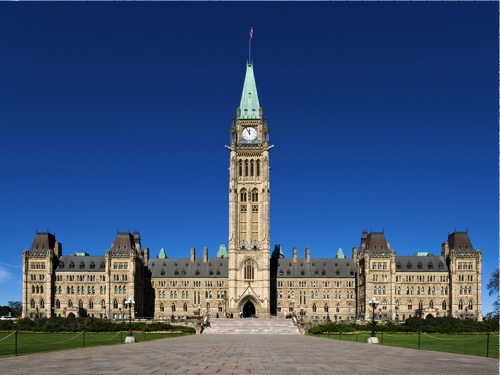
  • Here in Canada, the private member’s motion by Liberal backbencher Iqra Khalid has been causing some consternation. As with most things political and legal, the result has been a great deal of misunderstanding about what is actually said, and where the arguments really lie in the debate over the motion. Unfortunately, this has become a bit of a political Rorschach test (with people seeing their own political boogeymen in the issue regardless of the facts), meaning that fair-minded people can get easily confused as to the issues. So here are some points that we Christians should be considering when thinking and discussing this topic.

    1) This is a motion, not a bill. There is a very big difference in parliamentary procedure between a bill (which if passed becomes law), and a motion of Parliament (which if passed can only change the rules in parliament at most, and usually simply records the will of parliament). You can see this in the text of the motion, which instructs a Parliamentary committee to do research on a defined set of terms. You can check out this short backgrounder for more information.

    2) Religious Discrimination really is a problem. It’s hard to argue that there aren’t people who have hatreds of Muslims in Canada (even evidenced in the pushback the member bringing the motion has faced). In at least one (possibly deranged) case, it has led to violence. As people who are in favour of religious tolerance (i.e. religious people being allowed to be openly religious in our society), Christians generally should be ready to oppose unjustified religious discrimination, whether it is focussed on us as Christians, or on any other religious group. In this way, the motion makes some good statements about dealing with religious discrimination.

    3) There really is racism in Canada, and some of it expresses through the hatred of perceived “foreign” religions. Again, this is not particularly a controversial point. Some people (both in support of Muslims, and those opposed to Muslims) mischaracterize their feelings in terms of race. As we will see in a moment, part of the discussion does have to be about language, and so this is more of a complicating factor than it would first appear. That said, as a people purchased by Christ from every tribe and tongue and nation, and who affirm that all humans carry the image of God, we cannot support racial discrimination either, and indeed need to be openly opposing it. Here again, the motion has much Christians can applaud.

    4) The issue is language. Contrary to public opinion at present, Islam is not a race any more than Christianity is. Thus, while we need to oppose unjust religious discrimination, and racism, we need to be careful not to conflate the two. The Muslim teacher I have had the best conversations with happened to be a redhead from Newfoundland, who has a whiter complexion than I do, and I have spent more time in the Middle East than he has. Similarly, as Mark Noll has pointed out, the average Christian globally is a woman living in sub-Saharan Africa. Thus I would point out that the juxtaposition of systematic racism with what is termed “Islamophobia” is going to cause confusion. To oppose the teachings of any religion is not in itself racist. While Christians need to oppose unjust racial and religious discrimination, we need to be careful to keep open the possibility of disagreeing over religious beliefs.

    5) The Term Islamophobia is (a large) part of the issue Here the issue is going to depend largely on how you read the word. If Islamophobia refers to the irrational fear and hatred of Muslim people, there is valid reason to oppose it. As with any fear and hatred of people made in the image of God (regardless of what they believe), Christians must be at the forefront of opposing it. However, recent cultural movements have tended to mobilize the term “phobia” as a means of discrediting all criticism of the thing ostensibly feared. While the applicability of the terms in those cases can be debated elsewhere, when it comes to a creed or religion, applying the phobia moniker may chill free discussion of those creeds or religions.Where this may work against free speech, Christians need to be vigilant, since evangelism, and even internal religious debate within Christianity (as well as within Islam) may be chilled.

  • Music: Ajith Fernando on the benefits of music to our Christian devotions (I go acapella since I can’t play the piano)

    Prayer: Scotty Smith prays through the difference between condemnation and conviction

    Politics: Should we be building a wall on our southern border, and getting the Americans to pay for it?

    Law: American border agents with the authority to detain Canadians on Canadian soil? This was probably a bad idea before Trump.

  • A Quick Case for Christian Civility

    It’s a difficult time to be an online conservative Christian with a strong interest in the law and politics (and a strong aversion to populism). Since the ascent of Donald Trump to the presidency, my conservative Evangelical leanings have been considered tacit support of a populist political leader who I see as acting in both immoral and foolish ways. It even leads some to accuse me of the most heinous beliefs and ideas, and attack me as evil, or stupid because I happen to be an evangelical Christian (a demographic that overwhelmingly voted for Donald Trump). Of course, I’m Canadian, so I didn’t vote for Trump, and was frankly thankful for not having to vote in the American election, but it seems most of my American friends on both sides of the electoral divide have decided that an Evangelical faith in Jesus Christ is somehow closely tied with American politics of the Republican brand, making those who are Christian obviously trump supporters, and those who question Trump obviously unChristian.

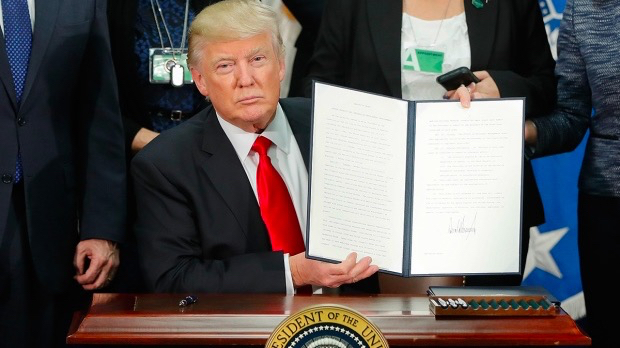
    This is even true for conservative Christians who supported Donald Trump in the previous election. They assume that I am also in support of Trump, and are likely to accuse me of Apostasy for my daring to point out that torture is evil, and refugees should not be limited based on religious background (though to be fair, Trumps executive order doesn’t technically limit Muslim refugees, any more than Obama’s record on accepting Christian refugees from Syria was technically anti-Christian bias). Much less for the fact that a president shouldn’t be running the country via executive orders (something I also opposed when Obama did it).

    What strikes me as most damaging of all of this is not the fact that it shows disagreement between people in the free world, but that both sides seem intent on simply demonizing their opposition, even when the person speaking claims to trust in Jesus Christ.

    This is very likely to increase strife, not limit it…

    Sadly, at least in my reading, my concern has most clearly been expressed by a legal scholar I generally disagree with:

    Because if America is to avoid slipping into civil war, the people we need to keep in focus are the people who elected Donald Trump. I get that the easy way to think and talk about those Americans is to call them racists, or sexists or idiots. No doubt there are some who are those (as there are some on the other side who are each of those things too). But it is neither true nor helpful to simplify this story into good versus evil. The citizens who elected Trump are not evil. And if America is going to survive this crisis, we need to convince them first that their President should not be President. We need to show them that their own values are consistent with ours, in this respect at least.

    This is good advice from a practical perspective, but much more so for Christians, whether we like Donald Trump as president or not. We are called by our Lord and Saviour to love others as we love ourselves (quoting laws from God in the Old Testament, recorded in Leviticus, no less), and very few people go out of their way to assume that their own motives are impure, so it is pointedly unChristian to assume evil on behalf of others, even when we vehemently disagree with the conclusions they’ve drawn.

    Instead, we need to be the kinds of people who lovingly, but truthfully make our cases, assuming that the other person is open to reason.

    When explaining what love looks like, the Apostle Paul goes out of his way to explain how love is patient and kind, and how it rejoices in truth (see 1 Corinthians 13). All of this means that it doesn’t behoove Christians of either side of this particular debate to assume the worst of people who disagree with you politically.

    I would also say, given my own opinions on how the Trump presidency is shaping up so far, it might be possible for left leaning people to find allies on the other side of the political divide on the issue of this president, if only the case can be made without demonizing your perceived opponents.

  • Economics: Finland experiments with a guaranteed minimum income.

    Theology: An old sermon by John Piper examines the wonder of the Incarnation.

    Church: Tim Challies reviews the practical ecclesiology book,the Vine Project.

    Christ: Despite some of the discussions I’ve had of late, yes most scholars in relevant fields still believe Jesus existed.